
Build for the fault-tolerant era
The developer platform inside the Quantiuum full stack
Create hybrid quantum-classical applications on one platform that scales to fault tolerance and beyond. Write in Guppy, encode for fault tolerance with Guppy FT, emulate with Selene and run through Nexus Console.
Learn more from the team that built Nexus
Develop, optimize and deploy with the Nexus Developer Platform
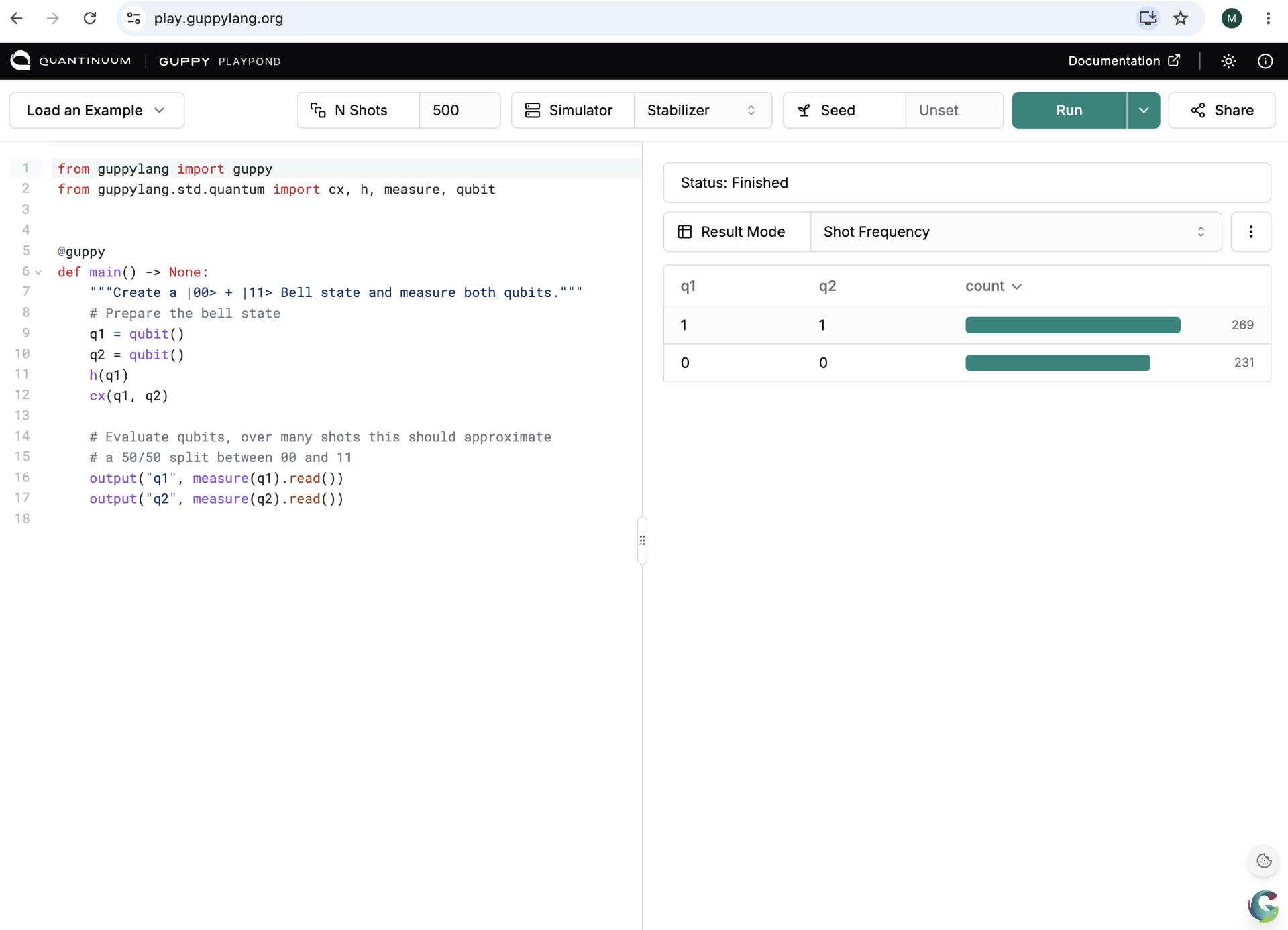
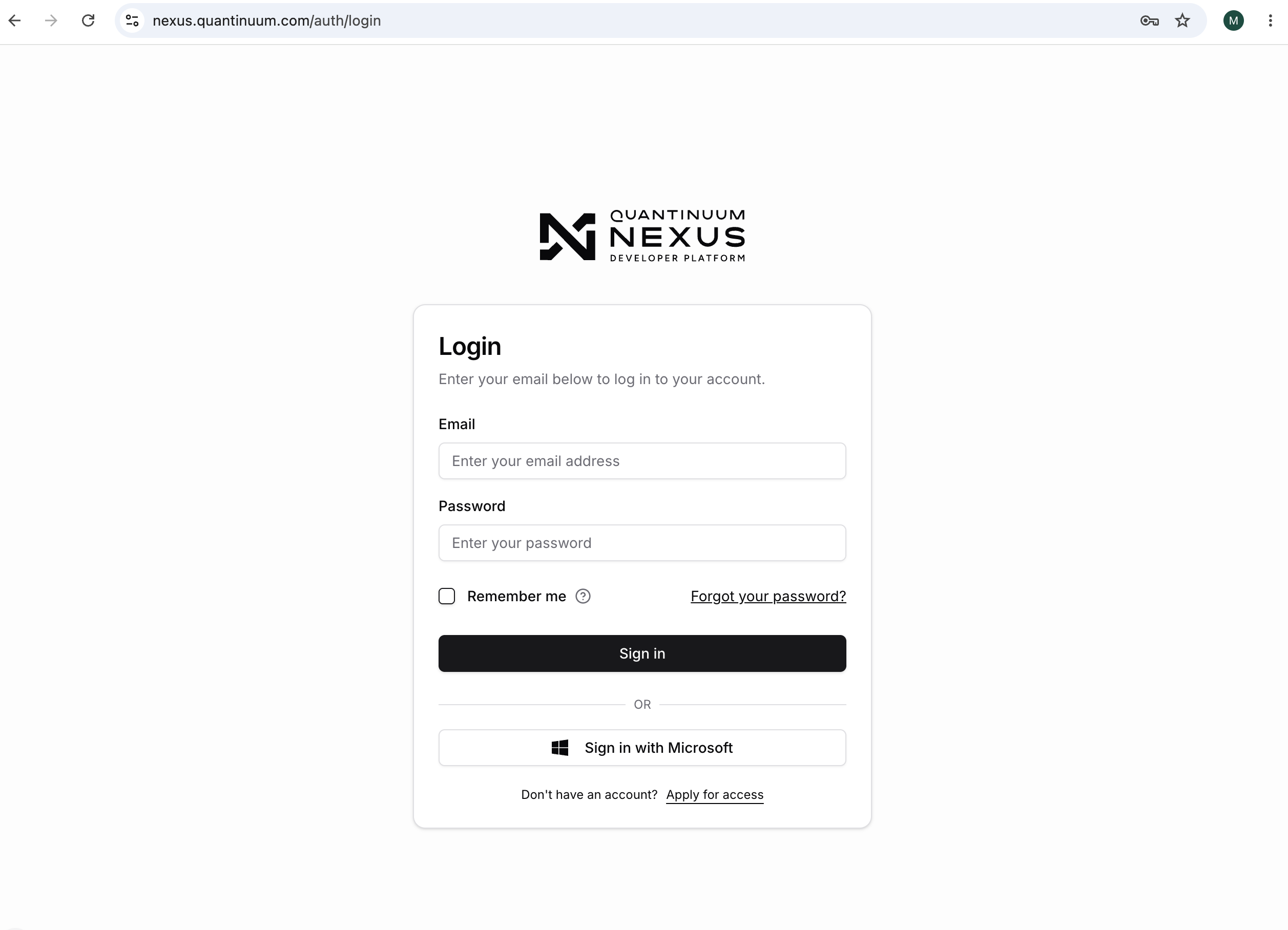
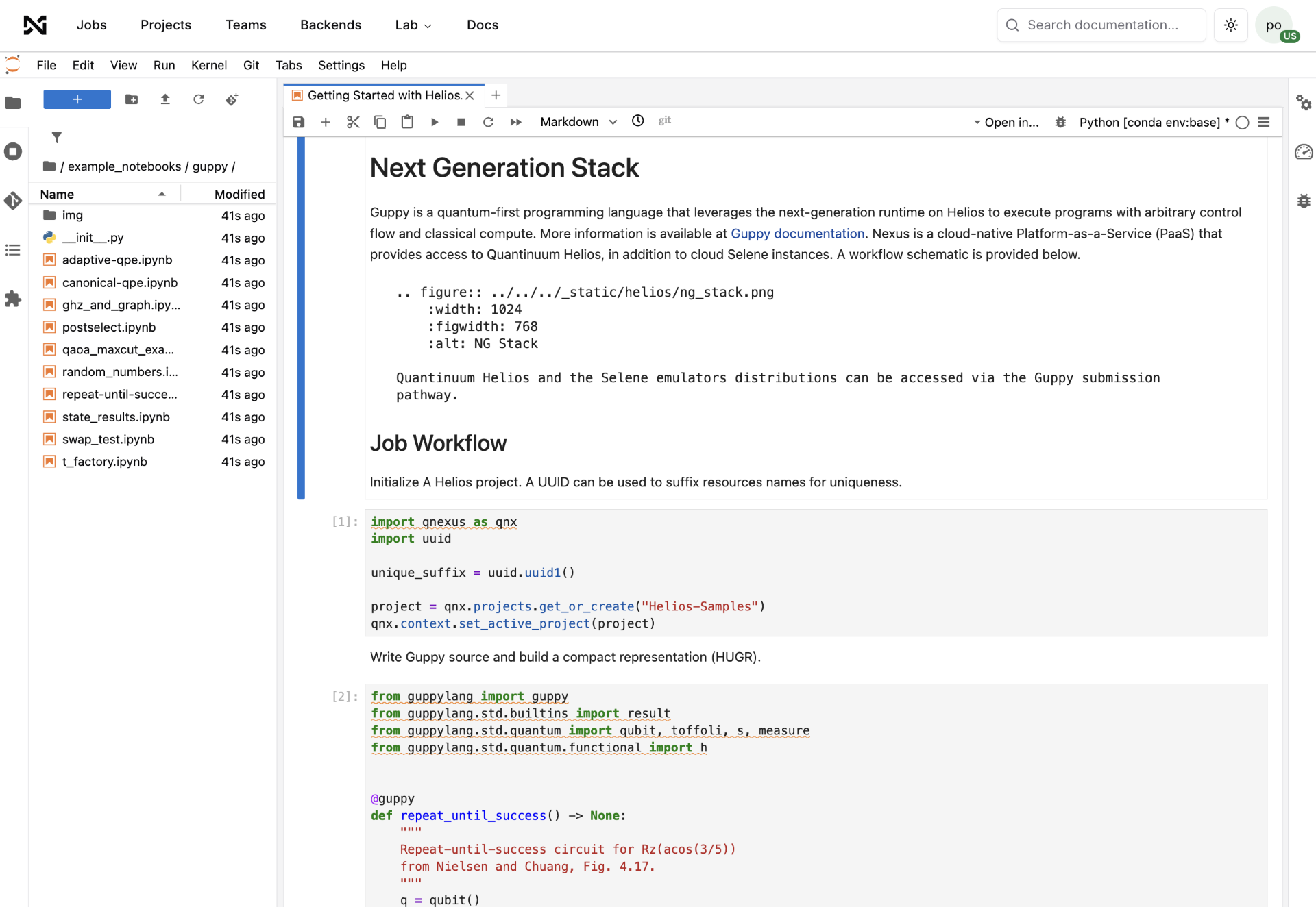
Write, run and compile Guppy programs in Guppy Playpond, in your browser. Then apply for a Quantinuum Nexus account to work in hosted notebooks with tutorials, simulators and our emulator.
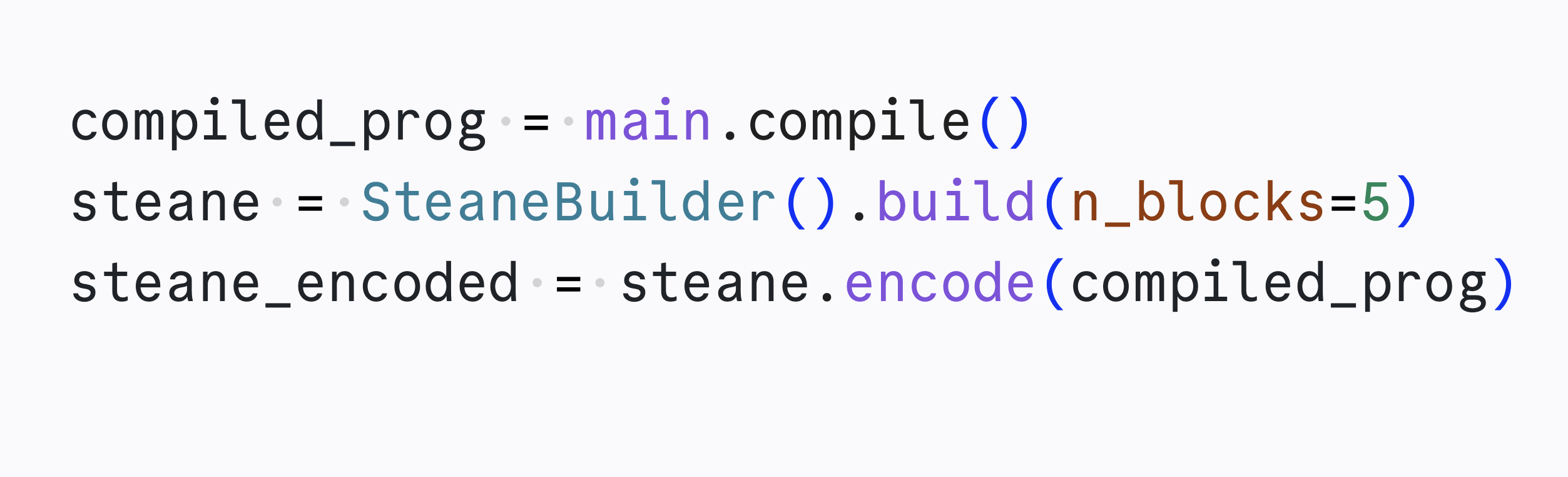
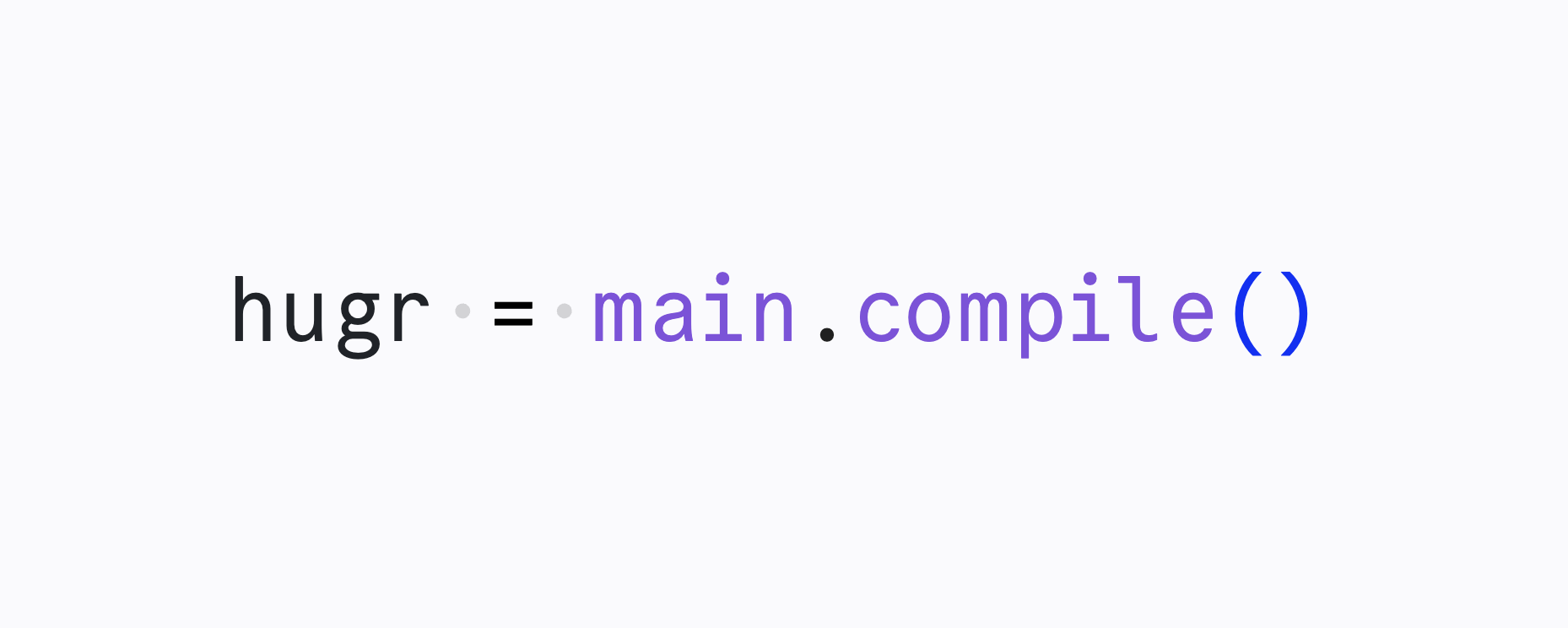
Encode your programs for fault tolerance with Guppy FT, then test in emulation and run on supported hardware, without implementing the codes yourself.
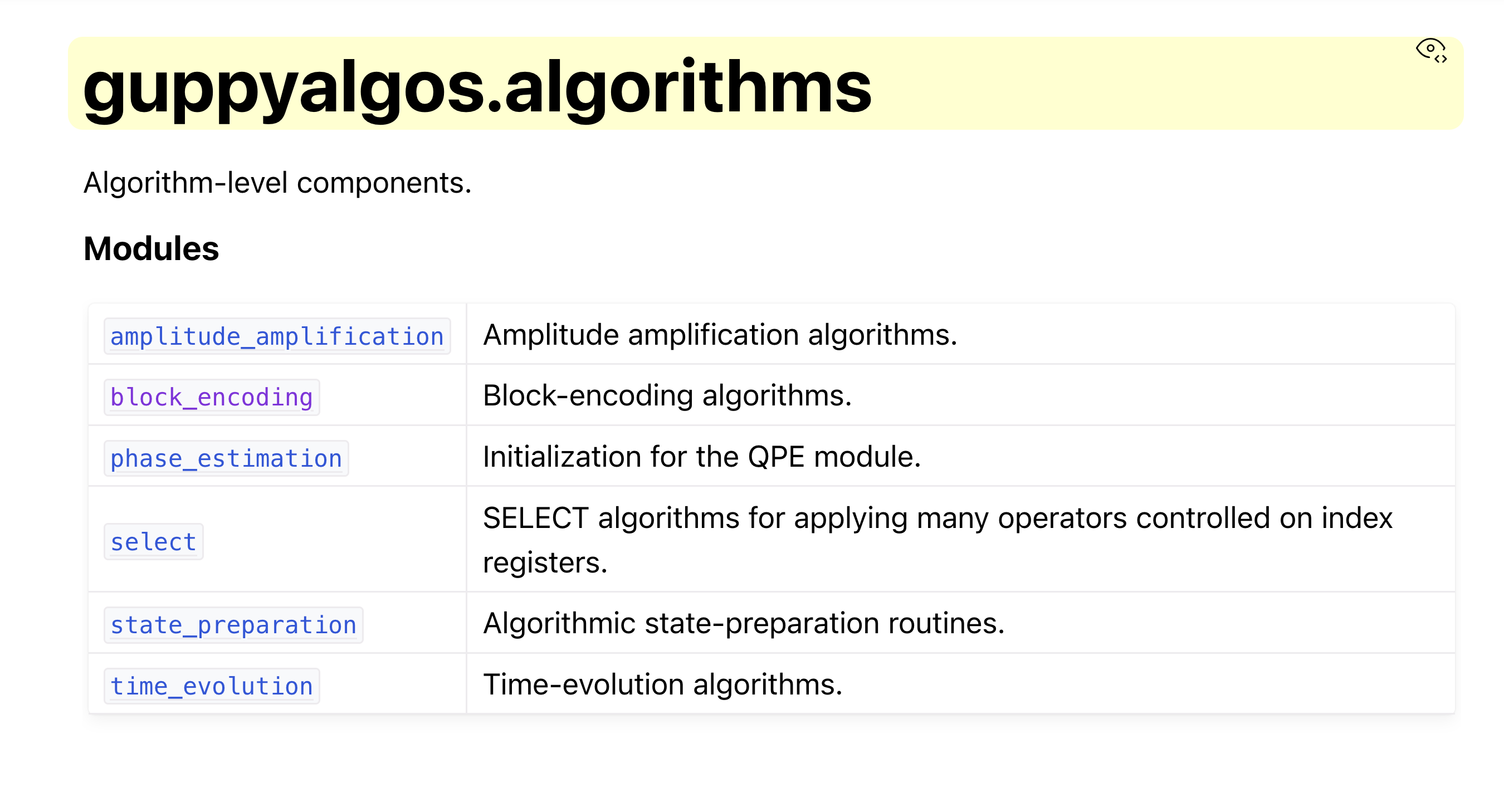
Guppy Algorithms gives you 21 open-source algorithm building blocks, licensed under Apache 2.0, for assembling applications.
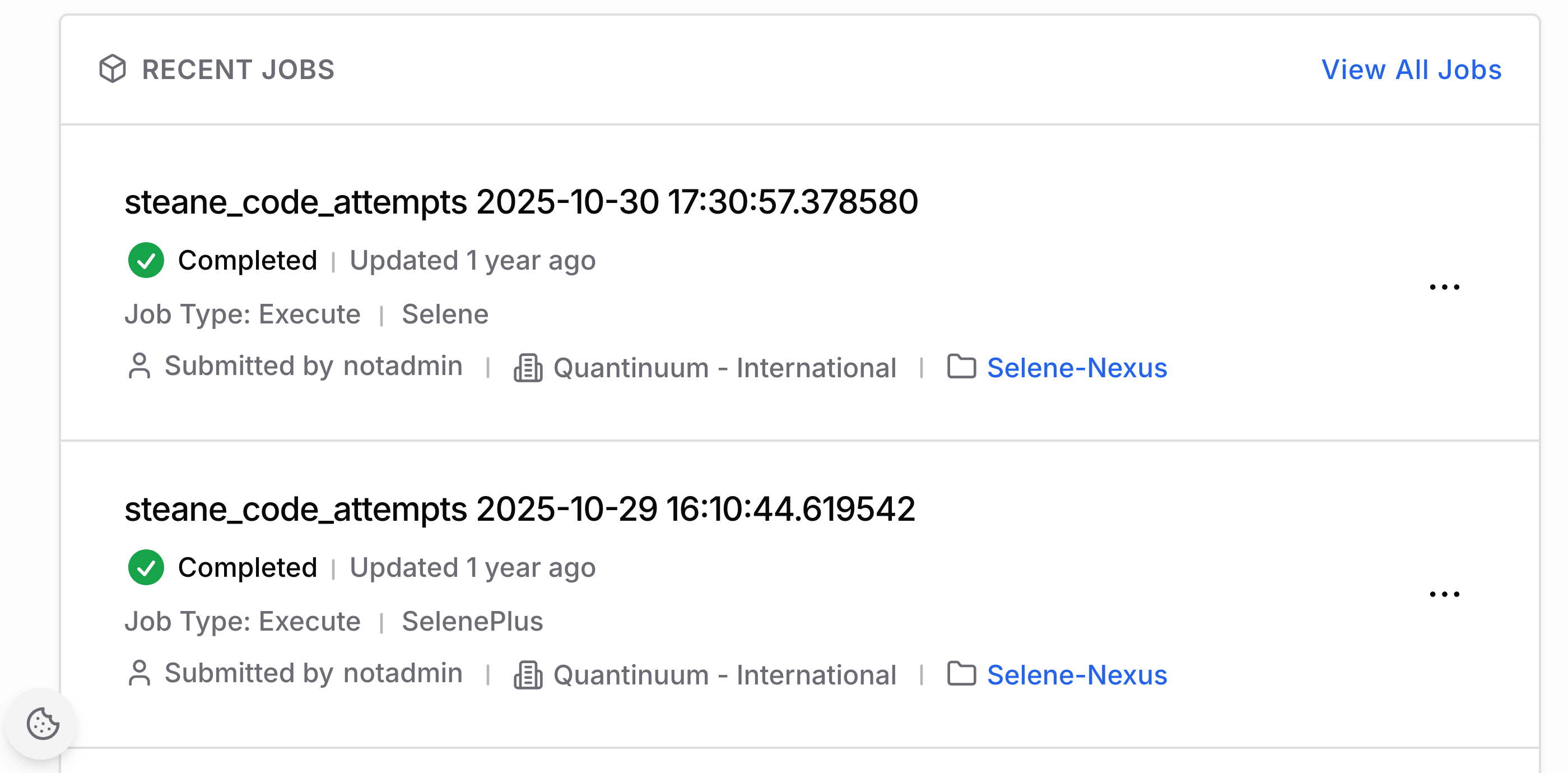
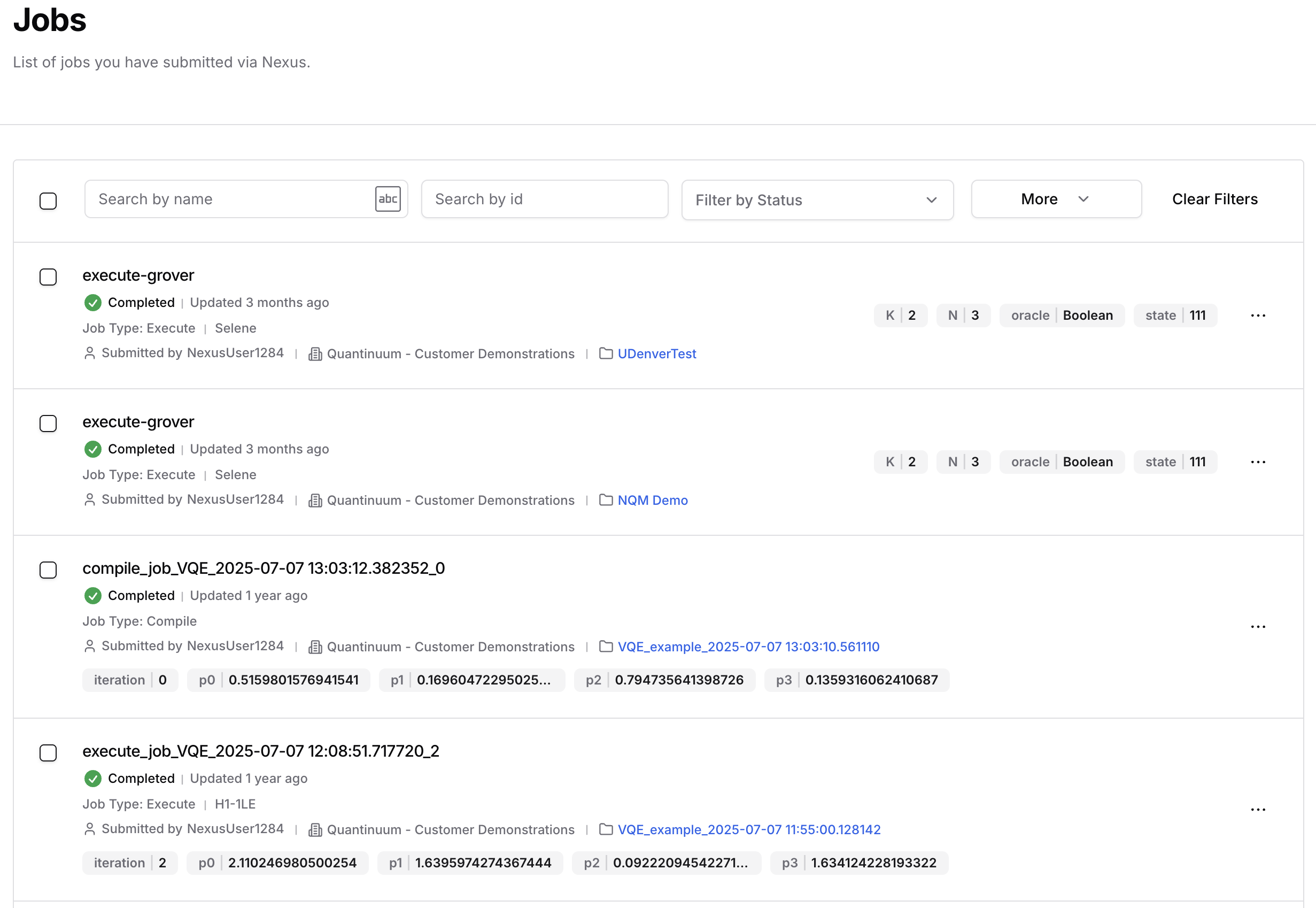
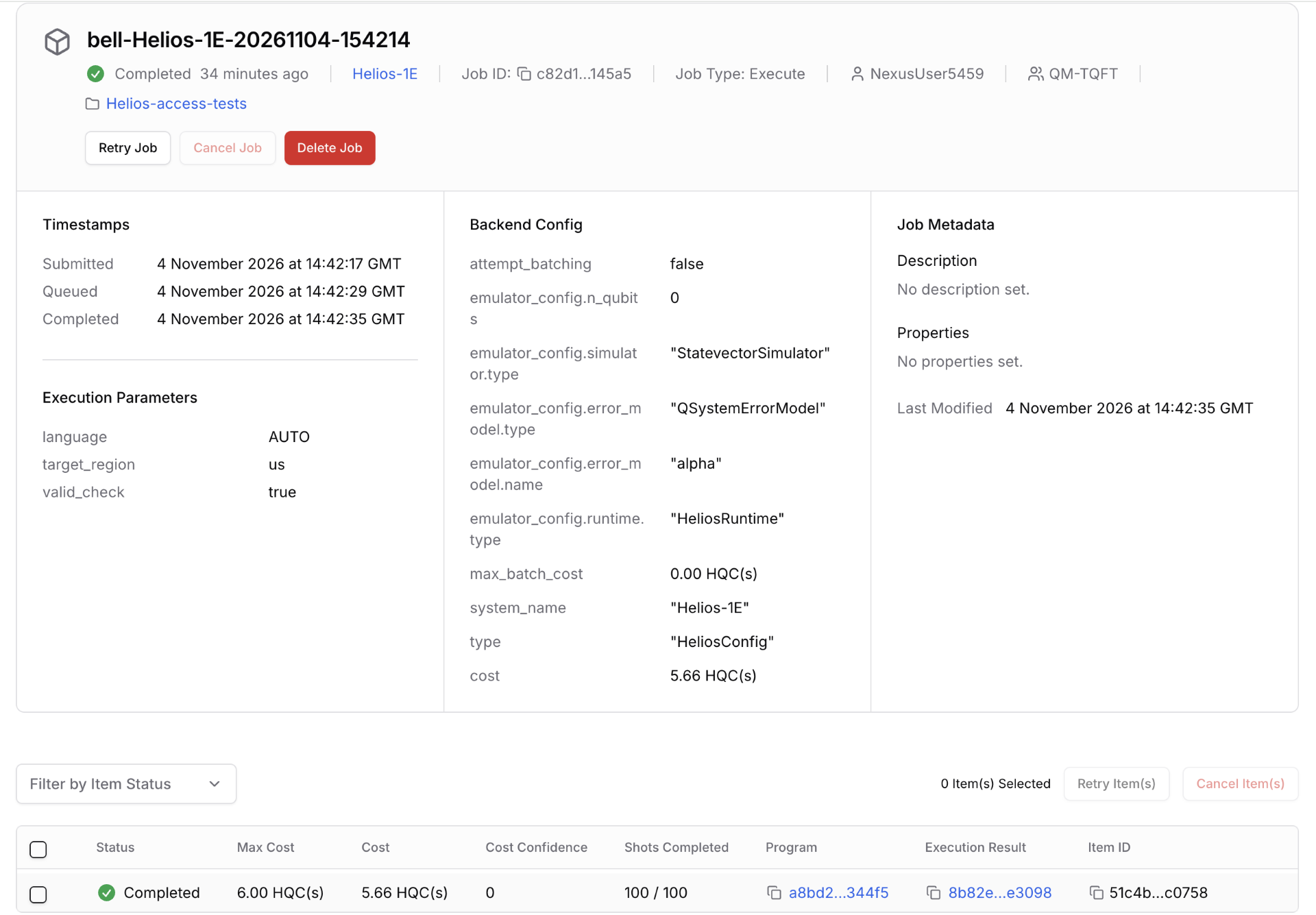
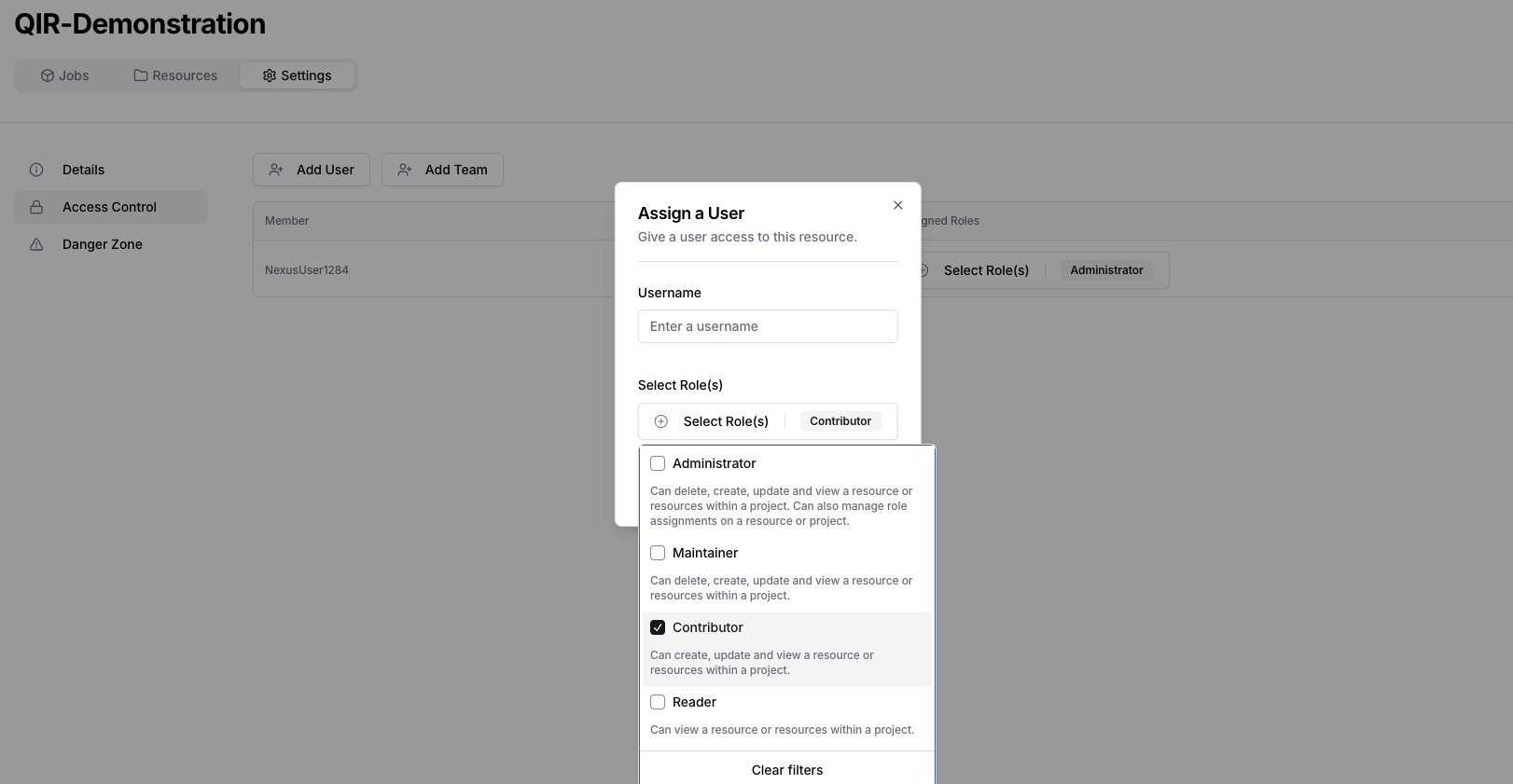
Nexus Console saves your programs and results, enables you to analyze the runtime behavior, and lets you share and collaborate on the data with team members securely.
What teams say about Nexus

「BMWグループにとって、Nexusは量子コンピューティングの取り組みを前進させるうえで重要な役割を果たしています。(中略)統合されたTKETコンパイラにより、QuantinuumやIBMの量子コンピュータを含むさまざまなバックエンド向けにコードをシームレスに変換・最適化できます。(中略)さらに、InQuantoの計算化学機能を活用することで、分子モデリングにおける量子・古典ハイブリッドワークフローの大規模化を進めることができました。」

「Unitary Fundでは、量子力学の根本的な問いに取り組むためにNexusを活用しました。(中略)Nexusの優れた信頼性と高度な機能によって、小規模システムのシミュレーションから量子ハードウェア上でのLF違反の実証へと研究の幅を広げることができました。Nexusは、私たちが基礎研究をさらに深化させ、量子科学の発展に貢献するための重要な基盤となっています。

「Nexusを活用し、最大52頂点規模の検証済み測定ベース量子計算を実施しました。これは、これまでに報告された測定ベース量子計算として最大規模の成果です。このプロトコルでは、古典情報と量子情報を組み合わせた複雑な処理が求められます。(中略)こうした処理は従来のゲートベース量子計算とは大きく異なるため、多くの量子コンピューティングフレームワークでは実現が困難ですが、Nexusはこれを可能にします!」
Program quantum computers in a language that reads like Python
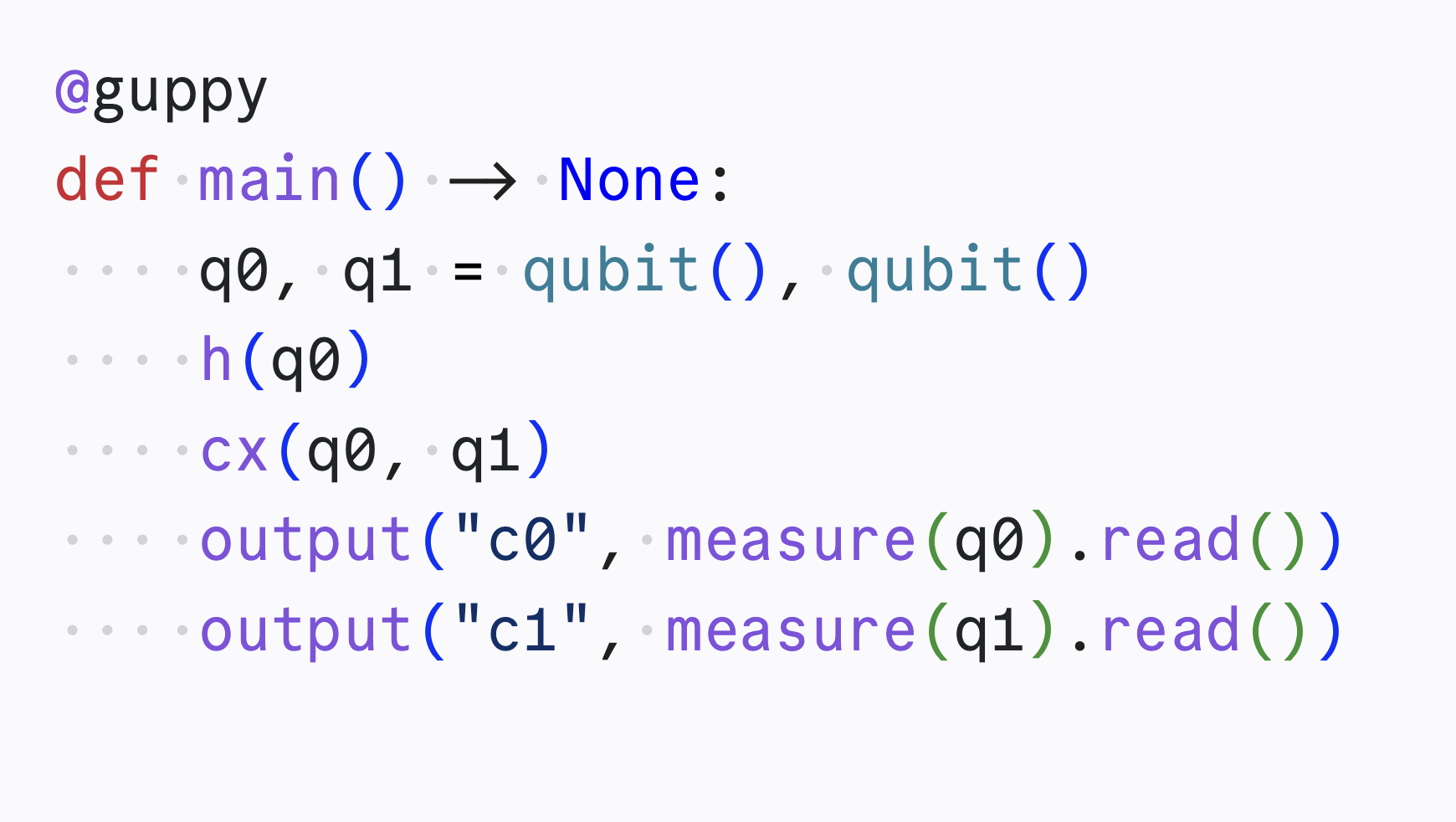
Guppy v1 is our quantum-first programming language, embedded in Python. Write programs that react to measurement results in real time with familiar if statements and loops, while strong types and qubit safety catch mistakes before they cost hardware time. Then run them on our systems.

Write the algorithm. Guppy FT encodes it for fault tolerance.
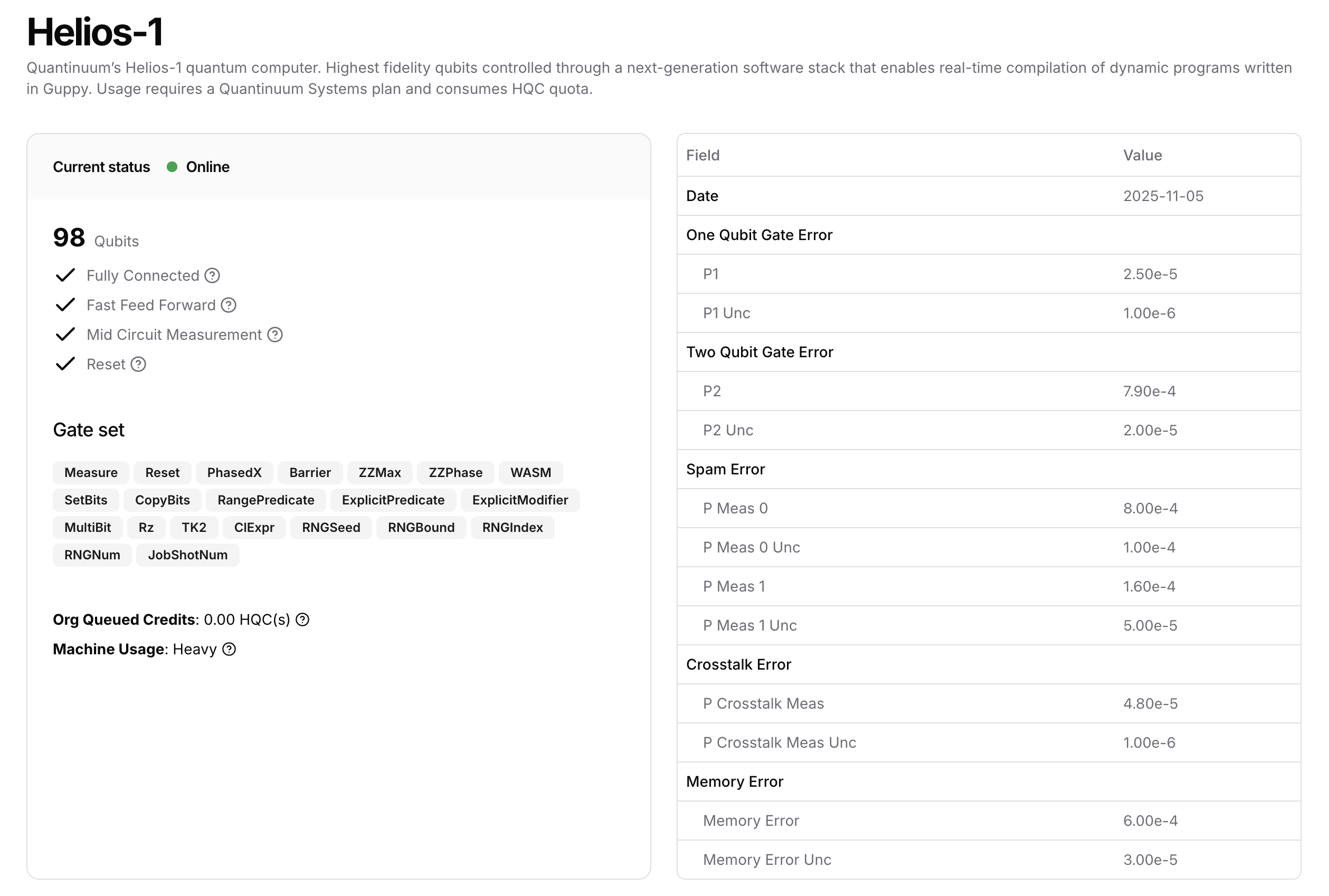
Guppy FT automatically encodes your program for fault tolerance, with the Steane code today, and flags any operation the chosen code does not support. Compare fault-tolerance approaches without rewriting your algorithm, test it in emulation, then run it on Helios.

Assemble applications from 21 open-source building blocks
Reuse what's already built. Guppy Algorithms gives you 21 open-source building blocks for assembling applications in Guppy, covering block encoding, phase estimation, arithmetic and measurement. Combine type-safe primitives with Python builders for algorithms that start from classical data.
Emulate your program before you spend hardware time
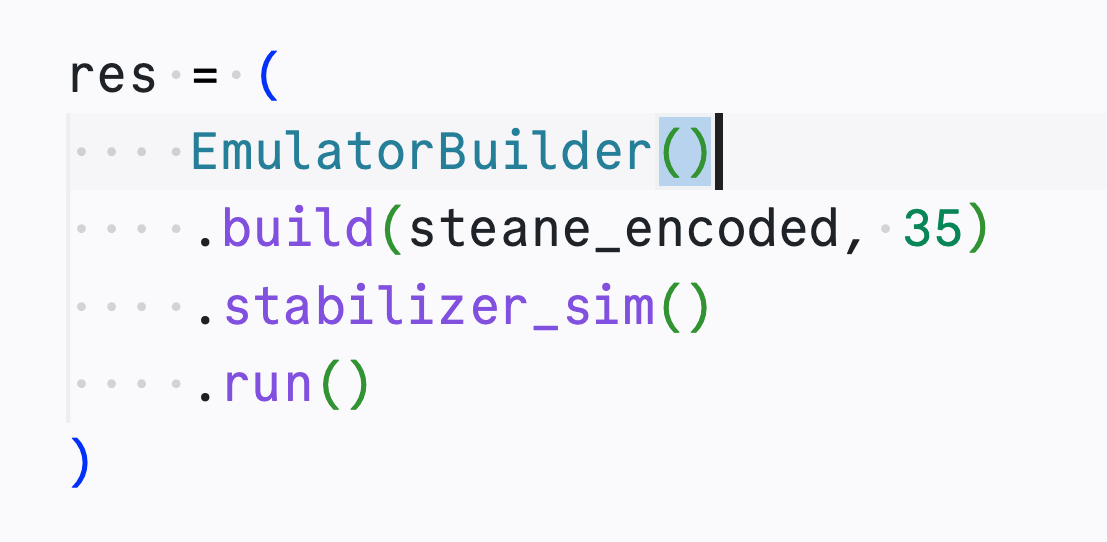
Selene runs your Guppy programs with realistic runtime behavior and error models, so you can debug, compare simulators and estimate resources before you go to hardware. It ships with Guppy and runs on your own machine. In Nexus Console, it can emulate the Helios runtime.

Get more accurate results and see inside every run
With Helios access, error suppression cuts memory and leakage errors, and Iceberg error detection flags shots where it finds an error, so you can drop them. Real-time metrics and Shotplot show every shot, so problems stand out. Hosted services leave less to manage (Planned for December 2026).

Run quantum and classical tasks as one workflow you control
A hybrid quantum-classical workflow framework that coordinates quantum execution and classical processing across supported computing environments, including HPC systems. It lets developers combine reusable tasks into workflows, manage dependencies and parallel execution, and connect different tools and backends within a single application. (Planned for December 2026).